T1 vs T2: Which Tax Return Does Your Business Actually Need?
Sole proprietor or incorporated? The return you file depends entirely on your business structure — and filing the wrong one (or missing one) costs you money.
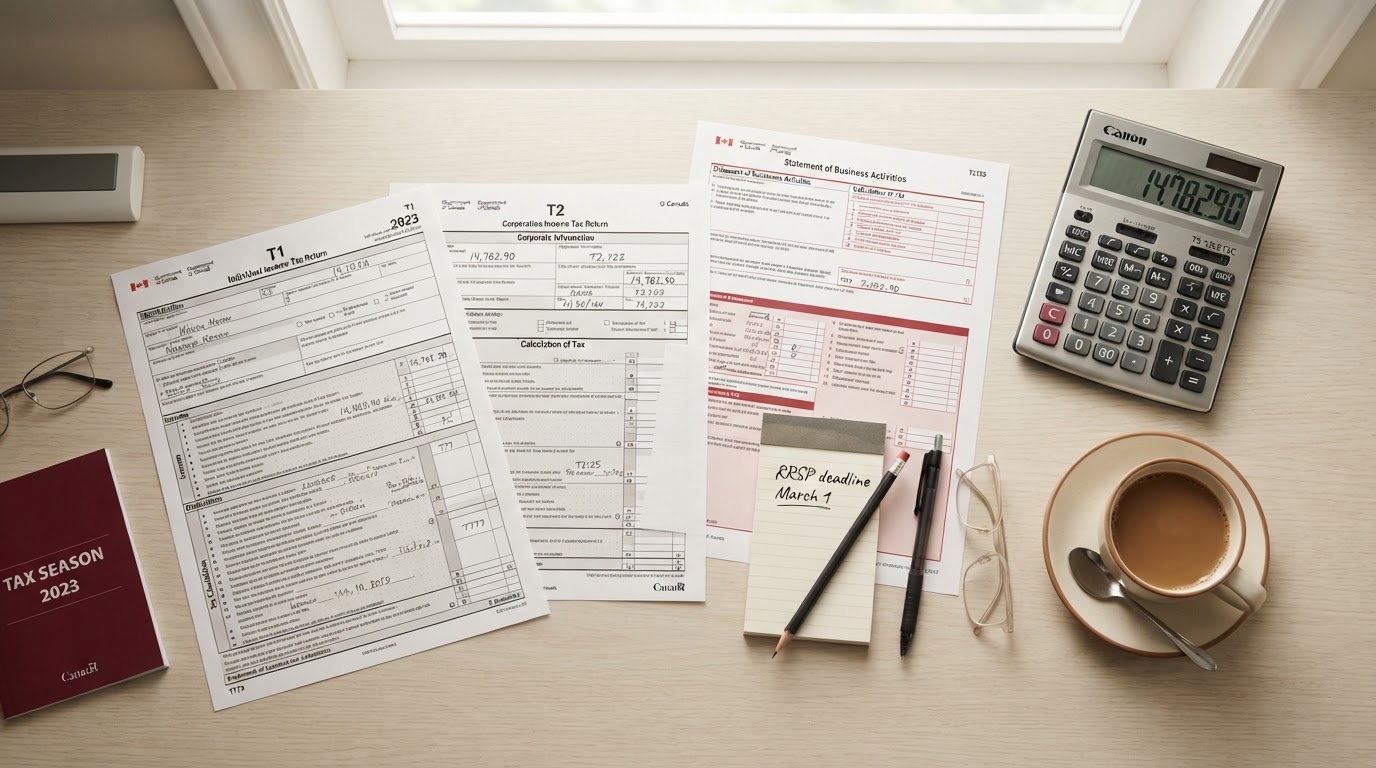
One of the most common questions we hear is: "Do I need a T1 or a T2?" The short answer is that it depends on how your business is structured — and many business owners actually need both. Here's how to tell which applies to you.
T1 — the personal return
The T1 is the personal income tax return. If you run an unincorporated sole proprietorship or a partnership, your business income is reported on a T2125 (Statement of Business Activities) within your personal T1. The business doesn't file separately — you do, as an individual.
T2 — the corporate return
The T2 is the corporate income tax return. Once you incorporate, your business becomes a separate legal entity and files its own T2. The income stays inside the corporation (and is taxed there) until you take it out — usually as a salary or a dividend, both of which then flow back onto your personal T1.
The part people miss: you may need both
- An incorporated owner who pays themselves a salary or dividend reports that income on a personal T1.
- A sole proprietor who also has employment income still files one T1 — everything combines on a single personal return.
- A corporation always files a T2, even in a year with no income or activity.
This is exactly where the structure of your business drives your tax strategy. Salary vs. dividend, retained earnings, and the small business deduction all interact across your T1 and T2 — and the right mix depends on your personal situation. We model both together each year so the numbers work for you, not against you.
Questions about your own situation?
We're an Ontario-based firm — happy to talk through how this applies to your business.
Book a free consultation